Real Beats Polished: Why Audiences Are Choosing Messy, Honest Creators Over Picture-Perfect Influencers
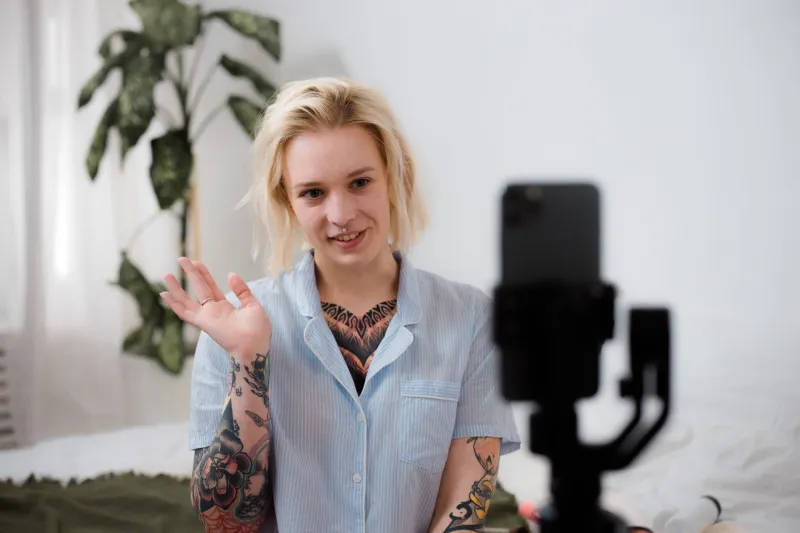
Let me paint you a picture. On one side, you've got a creator with a ring light, a tastefully decorated background, a color-graded thumbnail, and a carefully scripted 12-minute video that flows like a TV commercial. On the other side, you've got someone filming vertically in their car, mid-thought, mascara slightly smudged, saying something true.
Guess which one is winning right now.
If you've spent any real time on social platforms in the past two years, you already know the answer. The era of the perfectly curated influencer — the one who made their entire life look like a hotel lobby — is not dead, exactly, but it is very clearly losing altitude. And in its place, something messier, more honest, and frankly more interesting is taking over.
This isn't just a vibe. The numbers are moving.
The Metrics Are Telling a Story
A 2023 Stackla consumer content report found that 88% of consumers say authenticity is a key factor when deciding which creators and brands to support — up from 83% just two years prior. More telling: 60% of respondents said user-generated content, specifically because of its unpolished quality, felt more trustworthy than brand-produced content.
On YouTube, watch-time data has shifted noticeably toward vlogs, "day in my life" content, and unscripted reaction videos. TikTok's most-shared content categories skew heavily toward confessional storytelling and real-time emotional moments. Even Instagram — historically the home of the aspirational aesthetic — has seen its engagement rates drop on highly produced posts while more candid, Stories-style content holds steady.
Platforms aren't blind to this. TikTok's algorithm has been documented to surface emotionally resonant, raw content faster than slick productions. YouTube Shorts has shown similar patterns. The machine is learning what the audience already knows: real connects.
What Killed the Glossy Influencer Era?
Honestly? A combination of things, and they all arrived around the same time.
First, there was pandemic-era content. When everyone was stuck at home in 2020 and 2021, the contrast between artificially perfect creator content and actual human reality became impossible to ignore. Audiences started calling it out. The "I woke up like this" aesthetic, already straining credibility, snapped entirely.
Second, there was the deinfluencing movement — a loose but powerful social media trend where creators started explicitly telling audiences not to buy things, calling out overpriced products and manufactured hype. It spread like wildfire because it felt like someone was finally being straight with them.
Third — and this one's important — there was a generation that grew up with the internet watching influencer culture from the inside. Gen Z didn't discover social media as adults. They grew up on it. They know what a sponsored post looks like. They know when someone is performing for a camera versus actually talking to them. Their bullshit detectors are finely calibrated, and they are not shy about using them.
The Creators Who Figured It Out Early
There's a pattern you can trace through the creators who are thriving right now. They're not necessarily the most technically skilled. They're not always the best-looking or the most expensively equipped. But they share something: a willingness to be genuinely themselves on camera, including the parts that aren't flattering.
Take the rise of "get ready with me" content that actually includes the creator complaining about their skin, or fitness creators who post the workouts that went badly, or finance influencers who openly discuss their own past money mistakes. These aren't failures of professionalism — they're the actual product. The mess is the point.
Creator Alexis Nikole Nelson — better known as the Black Forager — built a massive following on TikTok not through slick production but through genuine, uncontainable enthusiasm and a camera style that feels like a friend pulled you into a forest. Her videos are joyful and real and sometimes a little chaotic. They're also wildly popular and have landed her mainstream media coverage and a cookbook deal. Authenticity didn't limit her ceiling. It became the ceiling.
Similarly, creators in the mental health, disability, and body positivity spaces have found that the less they perform and the more they simply exist on camera, the stronger their communities become. The comment sections on this kind of content are qualitatively different — less performative praise, more genuine conversation.
But Let's Not Romanticize This Too Much
Here's where I want to pump the brakes slightly, because the "authenticity" conversation has its own complications.
A lot of what gets labeled as raw and real is actually very carefully constructed rawness. The "messy" creator who somehow always has perfect lighting and a well-timed emotional moment is still performing — they're just performing a different kind of role. Manufactured vulnerability is a thing, and audiences are starting to clock it just as quickly as they clocked manufactured perfection.
There's also a real tension between authentic self-expression and the legitimate need to maintain some privacy and psychological safety. Not every creator owes their audience their worst days or their deepest wounds. The pressure to be constantly vulnerable can become its own kind of trap — one that's arguably harder to escape than the pressure to look polished, because at least with polish, there's a clear boundary between the performance and the person.
The creators who are navigating this best tend to be the ones who are honest about what they share and what they don't. They're not performing vulnerability — they're selectively, intentionally sharing real experiences while maintaining boundaries. That's not inauthenticity. That's just being a healthy human who also happens to make videos.
So What Actually Comes Next?
If the polished era is fading and performative rawness is already getting stale, what fills the gap?
My honest read: the next phase rewards specificity more than either polish or mess. Audiences are increasingly drawn to creators with a distinct, particular point of view — people who know exactly what they think about something and can articulate it with conviction. Not broad lifestyle content. Not generic relatable moments. Specific expertise, specific opinions, specific humor.
We're already seeing this in the growth of niche communities around highly specific interests — creators who talk exclusively about vintage synthesizers, or obscure regional American food traditions, or the history of shopping malls. The audience for these channels is smaller than a general lifestyle creator's, but the engagement is through the roof and the loyalty is almost cult-like.
Production value will come back, but differently. Not as a signal of aspiration, but as a tool for clarity — better audio so you can hear the person think, better framing so you can see their face, not a gloss coat to make their life look desirable.
The bottom line is this: audiences have gotten very good at sensing when someone is talking at them versus talking to them. The creators who understand that difference — and who consistently choose the latter — are the ones who are going to matter in the next chapter of online entertainment.
And that's not a bad thing. That's actually kind of great.