The Crash Nobody Warns You About: 10 Creators Who Burned Out and Came Back Stronger
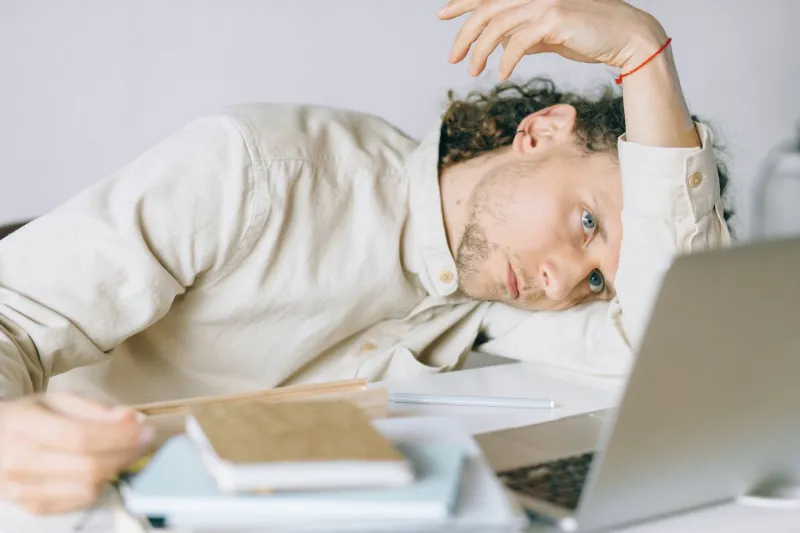
Everybody talks about the grind like it's a badge of honor. Post every day. Grow your audience. Lock in the brand deals. Chase the algorithm. What they don't talk about — at least not until things get really bad — is what happens when the grind starts grinding you down instead.
Creator burnout is real, it's widespread, and it's quietly ending careers that had every reason to succeed. We reached out to creators across YouTube, TikTok, Twitch, and Instagram to collect the kind of stories that don't make it into the "how I grew to 1 million subscribers" videos. What we got back was raw, honest, and more than a little uncomfortable.
Here are ten of those stories — and what each creator learned on the other side.
1. Jordan, Lifestyle Vlogger — "I Was Uploading Every Day and Crying Every Night"
Jordan hit 200,000 YouTube subscribers in under a year by documenting her life as a first-generation college student in Phoenix. The content was relatable, the growth was intoxicating, and the pressure she put on herself was quietly catastrophic.
"I was filming my breakfast, filming my commute, filming myself studying. Nothing felt real anymore — it all just felt like content," she says. The warning signs came in waves: missed deadlines, declining video quality, a growing sense of dread every time she opened her editing software.
What saved her: a full 30-day posting break she announced publicly. "Telling my audience I was stepping back was terrifying. But the response was overwhelmingly supportive. That was the moment I realized my audience actually liked me, not just my output rate."
Her rule now: Two upload-free days per week, non-negotiable. No exceptions for trending sounds or algorithm pushes.
2. Darnell, Gaming Streamer — "Twitch Became My Prison"
Darnell was streaming six days a week, sometimes eight to ten hours a stretch, while working a part-time job in Atlanta. His viewer count was climbing. His mental health was not.
"I stopped seeing friends. I stopped going outside. I told myself it was temporary, that I'd take a break once I hit affiliate, then once I hit partner. There was always another milestone."
He went dark for three weeks without warning his community. When he came back, he'd restructured everything: a fixed three-day streaming schedule, hard stop times, and a strict no-stream policy on weekends.
His rule now: Treat streaming like a job with actual hours — because it is one.
3. Priya, Beauty Creator — "The Sponsorships Were Making Me Hate My Own Face"
With a dedicated following on Instagram and YouTube, Priya was landing beauty brand deals regularly. The problem? Half the products conflicted with her actual values around clean ingredients, and she kept saying yes anyway.
"I was promoting things I wouldn't use myself, to people who trusted me. That cognitive dissonance was eating me alive." She eventually turned down a five-figure deal and publicly explained why. She lost some brand relationships. She gained something more valuable: the ability to look at her own content without feeling sick.
Her rule now: A personal "no-list" of product categories she won't promote, regardless of the offer.
4. Marcus, Fitness Creator — "I Was Preaching Wellness While Falling Apart"
Marcus built his brand around fitness motivation — early morning workouts, meal prep videos, transformation content. What his audience didn't see was that he was severely restricting his own diet to maintain an "ideal" on-camera physique and running on four hours of sleep to keep up with his posting schedule.
"I was literally making videos about taking care of your body while destroying mine. The irony wasn't lost on me, but I couldn't stop."
A stress fracture in his shin forced the pause he wouldn't give himself. Recovery became the content — and it performed better than anything he'd made before.
His rule now: If he wouldn't recommend the behavior to a viewer, he won't do it himself.
5. Sofia, Educational Creator — "I Ran Out of Things to Say"
Sofia's history explainer channel grew steadily for two years before she hit a wall she hadn't anticipated: creative depletion. She'd covered so much ground so quickly that every new video idea felt either redundant or too obscure to perform well.
"I started making videos I didn't care about just to have something to post. You can feel it in the final product — there's no energy there."
Her fix was counterintuitive: she switched from weekly uploads to bi-weekly and used the extra time for actual research and personal reading. Her average view count went up after the slowdown.
Her rule now: Never start filming until she's genuinely excited about the topic.
6. Tyler, Comedy Creator — "Going Viral Broke Me"
Tyler's sketch comedy clip went viral on TikTok — 14 million views overnight. Instead of enjoying it, he immediately panicked about replicating it. Every subsequent video was made with one eye on that number, and none of them came close.
"Viral success is a trap if you're not careful. I spent six months chasing a moment instead of making things I was proud of."
Therapy helped him separate his self-worth from his metrics. So did deleting the analytics app from his phone.
His rule now: He doesn't check stats for 72 hours after posting.
7. Amara, Mom Content Creator — "My Kids Started Dreading the Camera"
Amara's family-friendly channel was thriving, but she noticed something that stopped her cold: her kids were starting to act differently when she brought out the camera. Stiffer. Performative. Less like themselves.
"That was my wake-up call. I was so focused on content that I was changing my actual family's dynamic."
She restructured her channel to limit how often her children appear, leaning instead into her own solo content and behind-the-scenes family life only when her kids enthusiastically opt in.
Her rule now: Her family's wellbeing is never a content variable.
8. Kevin, Tech Reviewer — "The Free Stuff Stopped Feeling Free"
Kevin's tech review channel attracted a steady stream of PR packages and early-access products. What felt like a perk quickly became an obligation — an endless conveyor belt of things he had to film, edit, script, and publish.
"I wasn't reviewing tech anymore. I was processing inventory." He cut his review output in half and started pitching original series ideas instead of just reacting to what brands sent him.
His rule now: He initiates at least half of his content ideas. The other half can come from external sources.
9. Leah, Mental Health Creator — "I Was Absorbing Everyone Else's Pain"
Leah built a community around anxiety and depression content, sharing her own experiences and creating space for her audience to do the same. The community was powerful — and emotionally overwhelming.
"People were DMing me at 2 a.m. in crisis. I felt responsible for all of it. I wasn't their therapist, but I felt like I had to be."
She brought in a licensed therapist as a regular collaborator, added crisis resource links to all her content, and set firm boundaries around direct messaging.
Her rule now: She creates community, not dependency.
10. Ray, Travel Creator — "The World Became a Backdrop"
Ray spent three years filming his way across 40 countries. He also spent three years experiencing almost none of it. "I was always thinking about the shot, the story, the edit. I went to the Amalfi Coast and barely looked up from my monitor."
He now takes one trip per year with no camera — just to remember what travel actually feels like.
His rule now: Every trip includes at least one full day with no filming.
The Thread Running Through All Ten Stories
Reading these back-to-back, a few things jump out. Nobody burned out because they lacked talent or passion. They burned out because they treated an inherently human, creative act like a production machine — and eventually, the machine broke down.
The comeback in every case involved the same basic ingredients: intentional rest, clearer personal boundaries, and a return to making content they actually cared about.
If any of this sounds familiar, that's not a coincidence. It's a warning sign. And the good news is, every single one of these creators is still making videos — better ones, by their own admission, than anything they made when they were running on empty.
You can't pour from an empty cup. And you definitely can't film from one, either.