Sixty Seconds to Smarter: How Bite-Sized Video Is Quietly Revolutionizing the Way Americans Learn
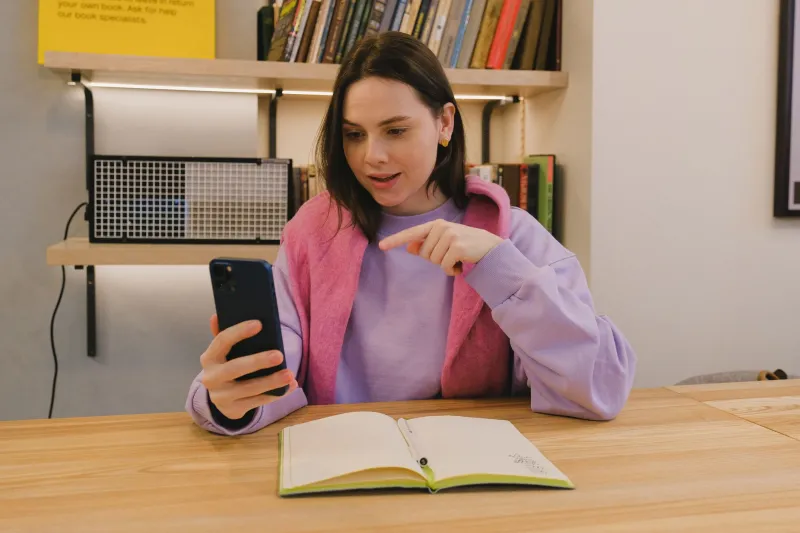
Remember sitting through a 45-minute YouTube tutorial just to learn how to change a guitar string? Yeah, nobody has time for that anymore. Across TikTok, YouTube Shorts, and Instagram Reels, a massive shift is happening — and it's not just about entertainment. People are genuinely learning things in under a minute, and the results are kind of blowing researchers' minds.
Welcome to the era of micro-learning, and honestly? It's about time.
What Even Is Micro-Learning?
At its core, micro-learning is exactly what it sounds like — delivering focused, digestible bursts of information rather than dumping an entire curriculum on someone at once. Think of it like educational tapas instead of a seven-course meal. A 58-second clip showing you how to properly grip a chef's knife. A 45-second breakdown of what the Electoral College actually does. A quick-hit video explaining compound interest using nothing but a coffee cup and a napkin.
This format isn't brand new — corporate training departments have been experimenting with it for years — but the explosion of short-form video platforms has turbocharged its reach in ways nobody fully predicted. According to a 2023 report from the Research Institute of America, information retention from micro-learning content can be up to 20% higher than traditional long-form instruction. The reason? Focused attention without cognitive overload.
The Psychology Behind Why Short Videos Actually Stick
Here's the thing about the human brain: it wasn't designed to absorb dense information for extended stretches. Cognitive load theory — a concept developed by educational psychologist John Sweller — suggests that our working memory has a hard limit. Pile too much in at once, and the brain basically starts bouncing things out to make room.
Short-form video works with that limitation instead of fighting it. When a creator has exactly 60 seconds to make a point, they're forced to strip everything down to the essential idea. No filler. No tangents. No ten-minute intro where they ask you to like and subscribe before saying anything useful.
Creators who have mastered this format talk about it almost like a discipline. Take someone like Chicago-based creator Danielle Okafor, who runs a financial literacy channel on TikTok with over 800,000 followers. "I used to make 15-minute videos explaining budgeting methods," she told us. "The retention was terrible. The moment I switched to 60-second concept breakdowns, my save rate tripled. People were actually coming back and rewatching them."
That rewatchability factor is huge. Unlike a 20-minute tutorial you'll never sit through twice, a one-minute clip is easy to replay, share, and revisit when you actually need the information.
What Are Americans Actually Learning?
Browse the #LearnOnTikTok hashtag — which has racked up billions of views — and the range of subjects is genuinely wild. Personal finance is massive right now, with creators breaking down everything from Roth IRA basics to understanding your credit score in under a minute. Cooking techniques, home repair hacks, and fitness form corrections are perennial favorites.
But it goes deeper than lifestyle skills. History educators, medical professionals, and even lawyers have found audiences hungry for quick, accurate information on complex topics. Dr. Mikhail Vargas, an emergency medicine physician in Houston, built a following of over 1.2 million by posting 60-second myth-busting clips about common health misconceptions. "People aren't looking for a med school lecture," he explained. "They want to know: is this real, is this dangerous, what should I do? I can answer that in a minute."
Language learning has also exploded in the short-form space. Apps like Duolingo have leaned hard into TikTok culture, but independent creators teaching Mandarin, Spanish, and ASL through 60-second daily lessons have built devoted communities that rival traditional language platforms.
The Creators Making It Work
What separates a genuinely useful micro-learning video from content that just looks educational? The best creators in this space will tell you it comes down to a single, ruthless commitment to one idea per video.
"The biggest mistake new educational creators make is trying to cover too much," says Marcus Webb, a math educator from Atlanta whose YouTube Shorts channel focuses on making algebra feel approachable for adults who struggled in school. "Pick one concept. Explain it one way. Give one example. That's your video. Done."
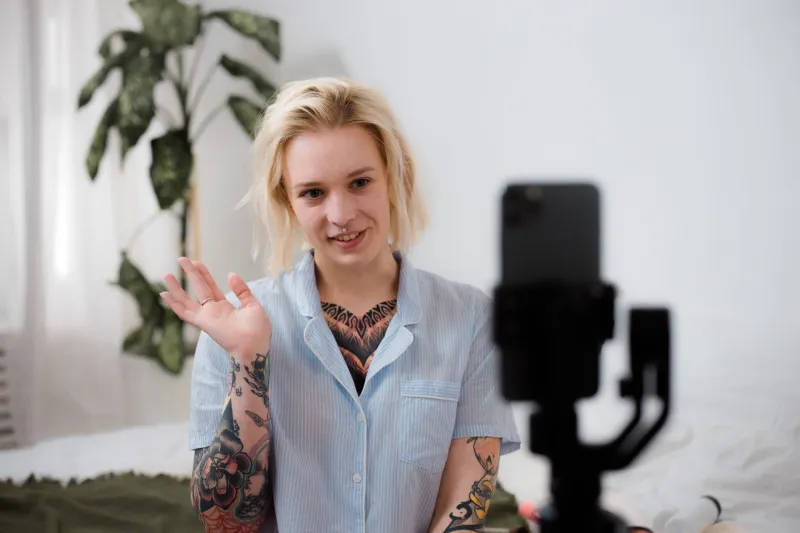
Production value matters less than you might think. Some of the most-watched micro-learning content is shot on phones, lit by a window, with no graphics or editing beyond a few text overlays. What drives views is clarity, confidence, and a presenter who genuinely knows their subject.
There's also a strong community element that long-form content often misses. Short videos generate comment sections where viewers ask follow-up questions, share their own experiences, and sometimes correct the creator — which, when handled well, becomes its own form of collaborative learning.
Is This Actually a Good Thing for Education?
Fair question. Critics of micro-learning argue that truly complex subjects can't be reduced to 60-second chunks without losing critical nuance. And they're not entirely wrong. You're not going to understand constitutional law or molecular biology through a TikTok series alone.
But that's kind of missing the point. The most effective micro-learning creators are upfront that their content is a starting point, not a complete education. They're sparking curiosity, correcting common misconceptions, and lowering the barrier to entry for subjects that feel intimidating. If a 58-second video convinces someone to finally open a high-yield savings account or start learning Python, that's a win — regardless of what comes next.
Educators who've embraced the format largely see it as a complement to deeper learning, not a replacement. High school teachers across the country are embedding short-form clips into classroom lessons. University professors are creating "concept preview" videos to prime students before lectures. Corporate trainers are using micro-learning modules for onboarding.
What's Next for Micro-Learning?
The format is only getting more sophisticated. AI-driven personalization is starting to allow platforms to serve specific micro-learning content based on what a viewer has already watched — essentially building a custom curriculum out of 60-second clips. Interactive elements, like in-video quizzes and branching paths, are making their way into short-form content.
For creators on platforms like this one, the opportunity is real. You don't need a studio, a production crew, or a teaching degree to share something genuinely useful with millions of people. You need a clear idea, a phone, and the discipline to say it in under a minute.
That's the beauty of where we are right now. Learning has never been more accessible — or more watchable. And honestly, we're here for it.