Perfectly Flawed: Why Viewers Are Choosing Real Humans Over Flawless AI in Their Feeds

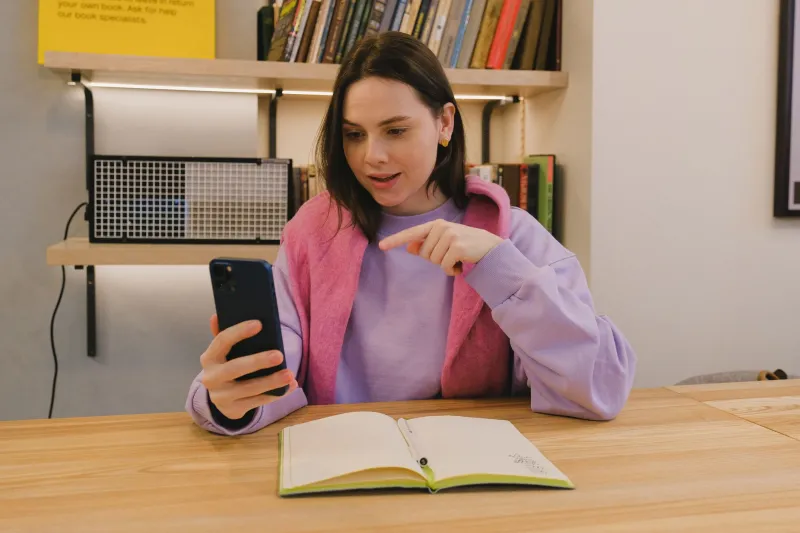
Photo: person filming authentic video content home setup casual real life, via www.kevinashleyphotography.com
AI-generated content has gotten very, very good. Like, unsettlingly good. Videos with no human on screen, narrated by a voice that sounds warm and natural, edited with precision that would take a human editor hours — all produced in minutes. The production quality is often indistinguishable from professional work.
And audiences are starting to hate it.
Not universally, and not always consciously. But there's a growing tension playing out across platforms right now, and it's worth paying attention to. The more AI content floods the feed, the more viewers seem to crave something that's noticeably, unmistakably human — including all the messy, unpolished parts that used to be considered flaws.
The Uncanny Valley, But Make It Content
If you've ever watched a computer-animated movie where the human characters looked almost real but felt deeply wrong, you've experienced the uncanny valley. It's that unsettling zone where something is close enough to human to trigger recognition, but just off enough to trigger unease.
AI content is hitting a version of that same wall. The scripts are coherent. The pacing is smooth. The visuals are clean. But something is missing — and audiences are starting to name it, even if they can't always articulate exactly what it is.
The most common complaint you'll see in comment sections under AI-generated videos is some version of: "Why does this feel so hollow?" or "I don't know why but I couldn't finish this." What they're describing isn't a technical failure. It's an emotional one. The content is optimized for clarity and engagement, but it lacks the texture of a real person having a real experience and trying to share it.
What "Authentic" Actually Means (And Why It's Hard to Fake)
Authenticity has been a buzzword in creator culture for years, but it's taken on new urgency now that the alternative is genuinely scalable. When anyone can generate a polished, articulate video with a few prompts, the thing that becomes genuinely scarce is you.
And "you" isn't just your face. It's the way you pause when you're looking for the right word. The laugh that comes out a little too loud. The moment where you get distracted mid-sentence by something off-camera. The opinion you share that's slightly unpopular. The mistake you leave in the edit because it's actually kind of funny.
These aren't production flaws. They're proof of presence. They're evidence that a real person was there, having a real moment, and chose to share it. That evidence is something AI can simulate but can't actually produce — and audiences are learning to feel the difference.
The Learning Angle: Why This Matters for Educational Content
This tension is especially interesting in educational content, which is one of the fastest-growing categories on every major platform right now. AI is exceptionally good at explaining things clearly, organizing information logically, and presenting it without the verbal tics and tangents that human educators sometimes fall into.
So you'd think AI would dominate educational video. And in terms of raw output, it's certainly flooding the space. But the most-watched, most-shared educational creators aren't being displaced by AI — they're actually benefiting from the contrast.
When a human creator teaching something gets genuinely excited about the topic — when their voice speeds up, when they go on a tangent because something is just so interesting, when they admit they had to look something up — that enthusiasm is contagious in a way that a clean AI explanation simply isn't.
Learning isn't just information transfer. It's an emotional experience. And the emotional dimension of watching a real person who genuinely loves their subject explain it to you is something that no amount of optimization can replicate. Viewers don't just want to know the answer. They want to feel like someone is excited to share it with them.
The Creators Who Are Leaning In
The most interesting response to the AI content surge isn't the creators who are trying to compete with it on its own terms. It's the ones who are deliberately moving in the opposite direction.
More creators are leaving in the outtakes. Posting the second take instead of the tenth. Filming in environments that are clearly real — lived-in rooms, messy desks, natural lighting that shifts mid-video. They're making creative choices that AI would flag as inefficient and audiences are responding to as intimate.
This isn't a new instinct. Raw, unpolished content has always found an audience. But the context has changed. What used to read as "low budget" now reads as "definitely human" — and in 2024, that's become a genuine differentiator.
Can AI Learn to Be Imperfect? (And Would That Even Help?)
Here's the obvious counterargument: can't AI just be programmed to include imperfections? Add a fake stumble, generate a synthetic laugh, simulate the appearance of distraction?
Sure. And some AI content is already doing this. But it runs into the same uncanny valley problem from a different angle. Manufactured imperfection reads as performance, and audiences — especially younger ones who've grown up consuming massive amounts of video content — are remarkably good at spotting the difference between a genuine moment and a staged one.
Authenticity isn't a feature you can add. It's a byproduct of actual human experience. The stumble means something because it happened. The laugh is contagious because it was real. The mistake is endearing because the person making it actually cares about getting it right.
The Scarcest Resource in Digital Media
Here's the uncomfortable conclusion that all of this points toward: in a world where content is infinitely scalable and AI can produce more of it than any human ever could, genuine human presence is becoming a genuinely scarce resource.
And scarce resources become valuable.
Creators who understand this — who lean into their humanity instead of trying to compete with AI on production quality — are positioning themselves well for whatever the next phase of digital media looks like. Not because they're anti-technology, but because they understand that the technology can't replace the one thing audiences are increasingly hungry for: the feeling that there's a real person on the other side of the screen.
Perfect content is everywhere now. Human content is starting to feel rare. And rare, as any creator worth their salt will tell you, is where the real value lives.